 Demo previewPlay free demoVirtual credits · No registration · 18+

Hexagon
Play for real money ↗Operator links on this page are affiliate links. The site may earn a commission, which does not affect ratings or the published facts.
Hexagon — Game Specifications
| Parameter | Value |
|---|---|
| Game Category | Board Games |
Table of Contents
Hexagon Game Review
Taking space also takes an opponent's pieces in Hexagon. Galaxsys' board game uses clones, jumps and nearby flips to turn a small foothold into control of the board. Score: 8/10. The practice session finished 6 complete games. Clear move highlights make the opening approachable, though choosing a spot well takes more thought than finding a square the game allows.
A larger group creates more places to attack.
Clone nearby or jump further
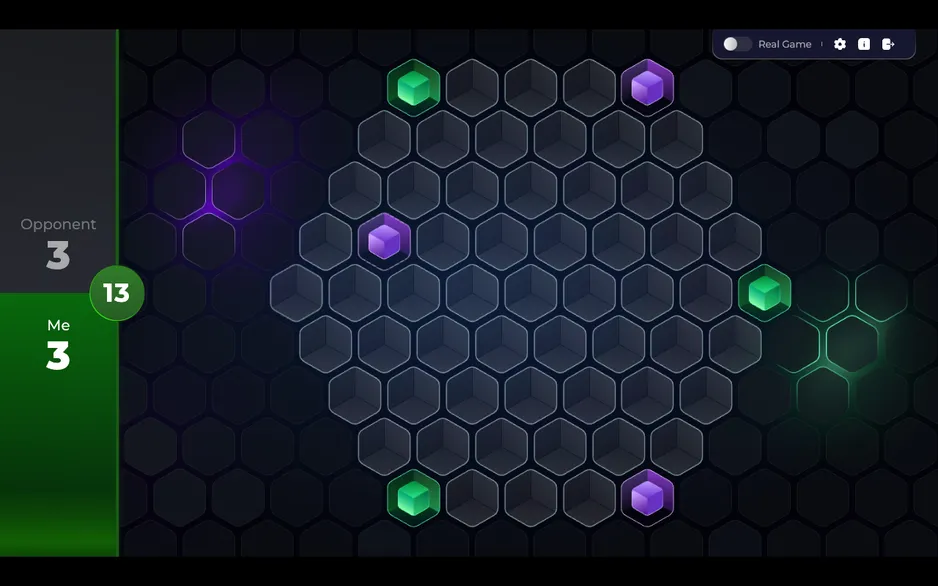
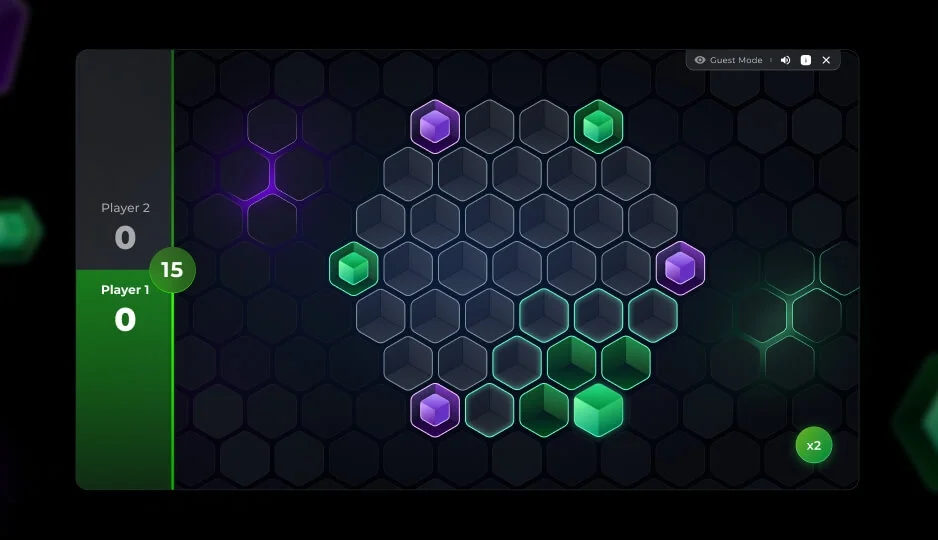
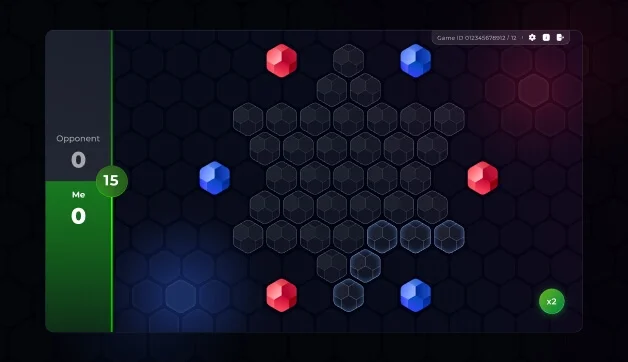
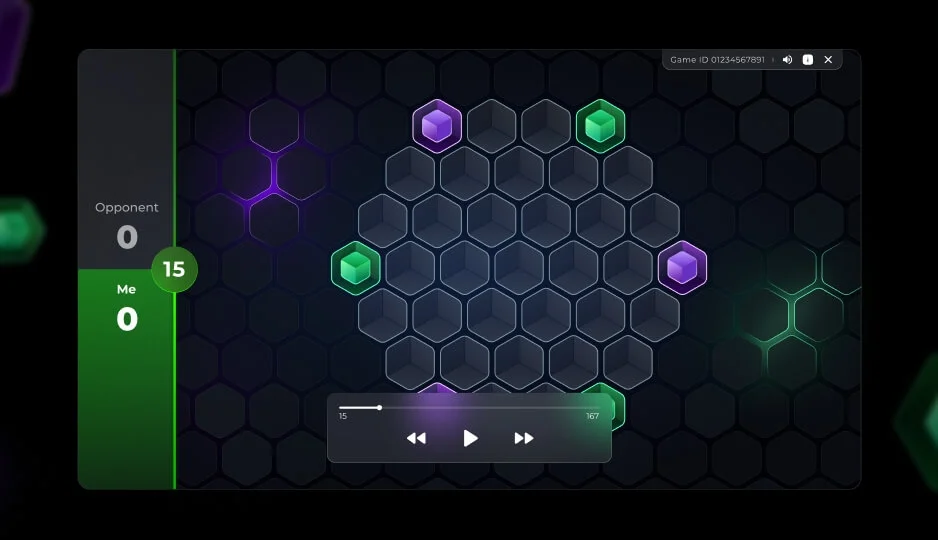
Click an own cube to reveal spots. First-wave highlights allow a clone, leaving the original piece in place while adding another nearby. A second-wave jump moves the piece further away. Landing converts neighboring enemy pieces. The best spot therefore depends on both the cubes gained now and the spaces left open for the opponent's next reply, especially once the board starts to fill.
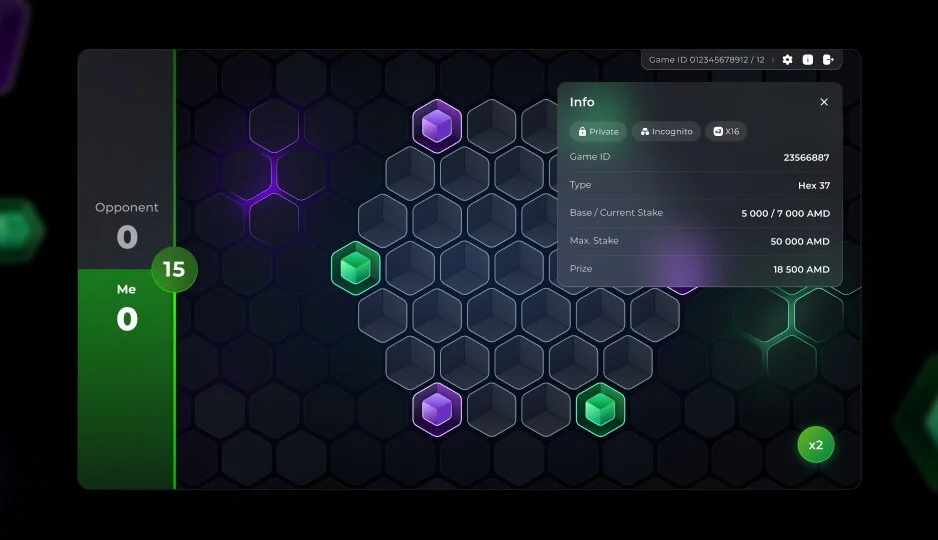
Official material describes three board layouts. The tested board was Hex 61. Other layouts can change which routes remain open, so a familiar first move may have a different value when gaps or edges alter the nearby spots. Table stakes vary by the room joined. Official material says prizes depend on the pot less a platform commission, rather than a universal multiplier ladder.
Demo: six completed boards
The clone-and-jump practice table compares completed boards, with notes on legal highlights for each move. Testing preferred the first available clone in board order, using a jump when cloning was unavailable; inspections sometimes allowed timed automatic moves.
| Measure | Result |
|---|---|
| Completed games | 6 |
| Wins | 6 |
| Losses | 0 |
| Draws | 0 |
| Board played | Hex 61 |
| Recorded cash stakes | — |
| Cash returned | — |
| RTP estimate | Not calculated |
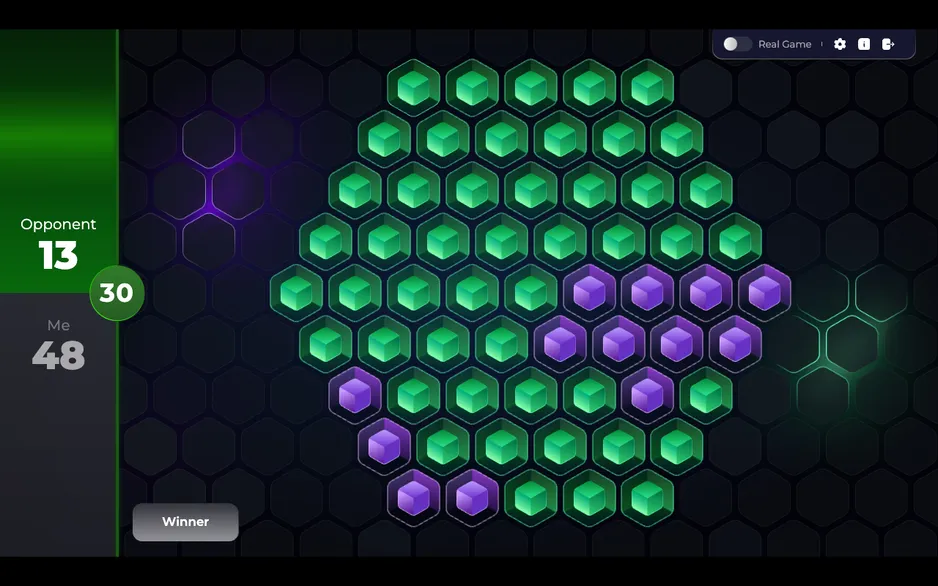
Every completed board ended in a win. The first finished 40 to 21. The third ended 48 to 13, while the final result reached 52 to 9, giving concrete examples of how far the cube totals can separate after repeated flips.
Those figures are board scores.
The brief demonstration says little about facing skilled human opponents. The session recorded winning boards plus cube scores.
Why a legal spot can be costly
Cloning keeps the starting cube. Jumping vacates its square. That distinction matters because an attractive distant landing can leave a hole the opponent uses on the next turn, converting cubes back and undoing much of the apparent gain. Early expansion feels forgiving. Late moves need closer checking. Look at the enemy's reachable spots before treating a large immediate flip as the strongest move on the board.
| Board idea | Effect | Tactical cost |
|---|---|---|
| Clone | Adds a nearby cube | The starting position remains occupied. |
| Jump | Moves further from the source | The source square becomes empty. |
| Conversion | Changes nearby enemy cubes | A landing can swing several pieces. |
| Board edge | Limits neighboring spaces | Shape affects which replies remain possible. |
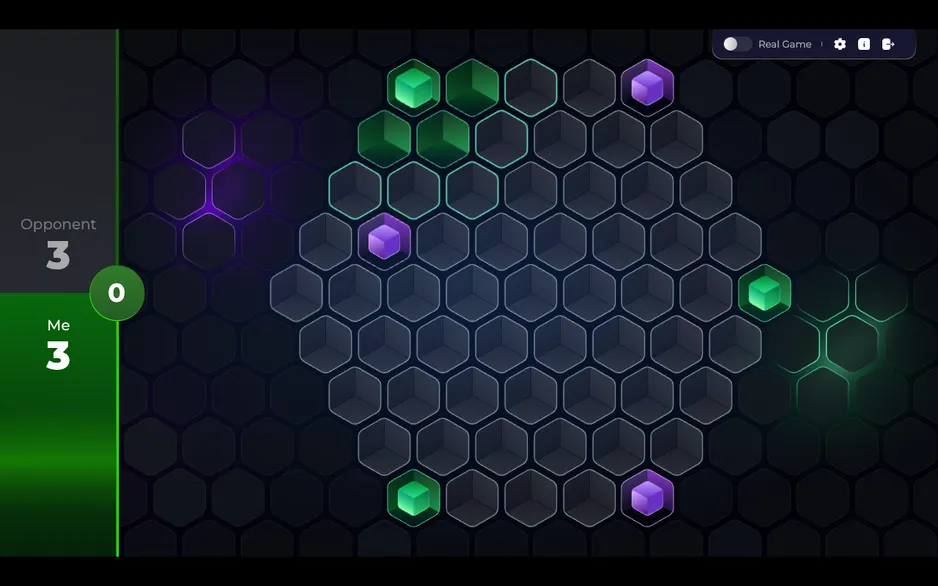
Move highlights teach reach more clearly than the cube colors alone. They identify permitted choices. The player still has to judge which choice keeps useful territory, though free practice is enough to learn how a jump differs from a clone before joining a paid room. Try comparing the spot with the square left behind. That habit is more useful than chasing the largest immediate color change.
Settings without changing the contest
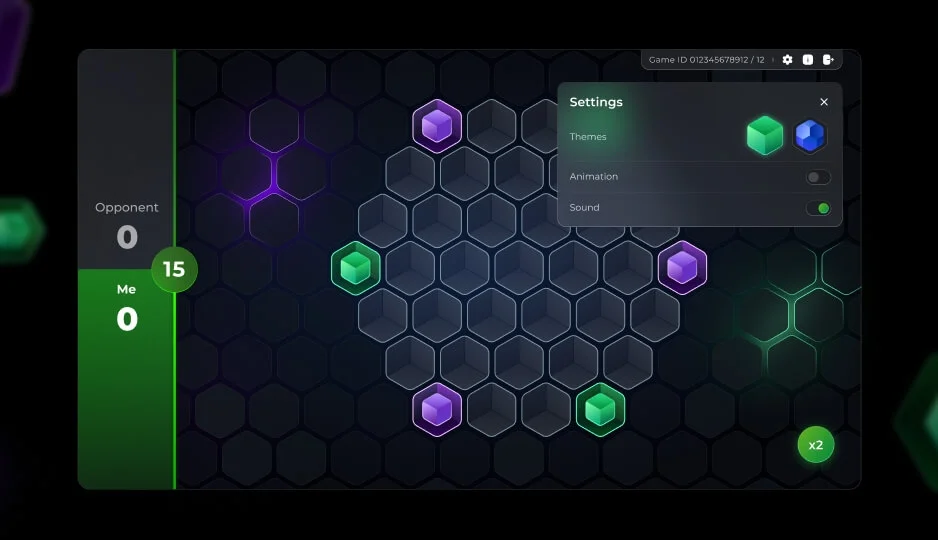
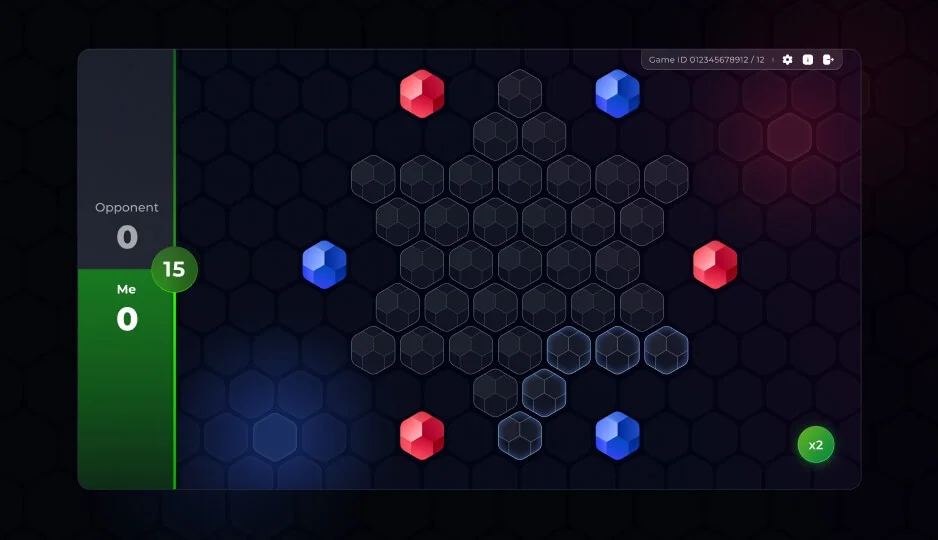
The settings popover contains Themes, Animation and Sound. A different theme changes the table's appearance, while the flip rule still depends on where a cube lands rather than the chosen colors or sound level. The information panel names the table. Read its conditions before joining. The visible stake or prize label alone should never be treated as proof that money has been accepted or credited.
The captured demo showed board totals, with no cash balance.
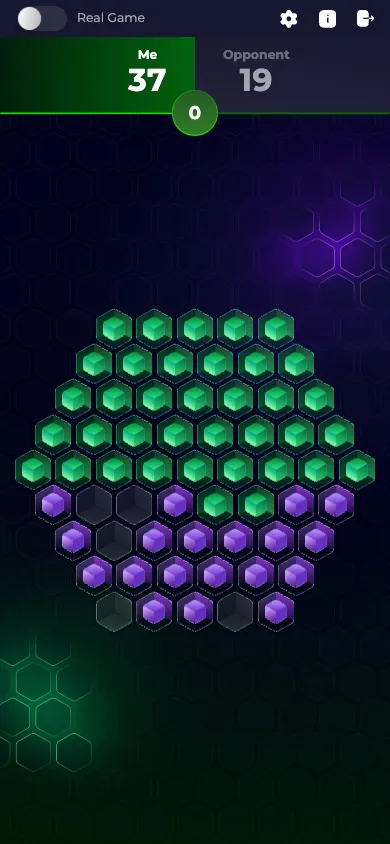
Mobile browser support covers iOS and Android. The portrait view keeps the board visible, though closely packed cubes require more deliberate taps than a broad desktop layout. Select the source first.
Check the highlight before choosing a spot. A piece that appears active still needs an actual selection to show its legal reach, making visual confirmation worthwhile on a smaller screen.
Who should skip this board?
Hexagon is a weak choice for anyone seeking an instant random prize. The game takes alternating turns. Each move changes the next decision, so learning the board means following the opponent rather than repeating the same action until a round ends. Frankly, a careless jump can be a gift. Readers who dislike watching territory change after every reply may find the contests more demanding than entertaining.
- Immediate gains can expose a strong enemy response.
- Different layouts require fresh attention to the board shape.
- Check the room stakes plus commission before joining.
Verdict: easy moves, worthwhile decisions
The 8/10 rating rewards useful highlights and the clone-versus-jump trade-off, but the board asks for sustained attention that may feel slow beside an instant betting game. The six wins are encouraging practice results. They establish little about competitive strength. Hexagon earns its score through visible tactical choices, especially the need to weigh a tempting flip against the space left for an opponent to use.
Adults 18+ should set limits before any cash table. Keep a fixed session length. Choose an entry budget that can be lost without extending play to recover it. Practice scores cannot be withdrawn. The hosting operator sets deposit options and withdrawal terms.
Screenshots of Hexagon
Frequently Asked Questions — Hexagon
How do pieces move in Hexagon?
Select a cube, then choose a highlighted clone or jump spot. Landing converts nearby opposing cubes.
What RTP does Hexagon have?
No fixed RTP is published in the available official record. This is a skill board game with opponent decisions.
What is the maximum prize?
Official material says there is no fixed maximum; prizes depend on table stakes and the pot, less platform commission.
Can Hexagon be tried free?
Yes, a demonstration mode is available for practice with board moves.
How many layouts are available?
Official material lists three board layouts. The completed practice games used Hex 61.
Does Hexagon support phones?
Yes, Hexagon supports browser play on iOS and Android devices.
How was Hexagon tested?
Practice completed 6 games on Hex 61, preferring clones before jumps. Board outcomes were recorded; no cash return was available.
Player rating
Player comments
Only registered players can post comments.
No comments yet. Share how the game played for you.