Bingo Lottery Games by Galaxsys: Compare How They Play
Bingo and lottery games use drawn numbers to settle a ticket. Galaxsys covers pattern cards, selected-number tickets and range bets in this group. The number of choices and the way a ticket pays differ, so check the game format before choosing a stake.


How a round works
A round starts with a ticket or number selection. The draw then supplies the result. A payout depends on matches, a pattern or the selected market. Buying more tickets also raises the total cost; it does not turn the draw into a known result.
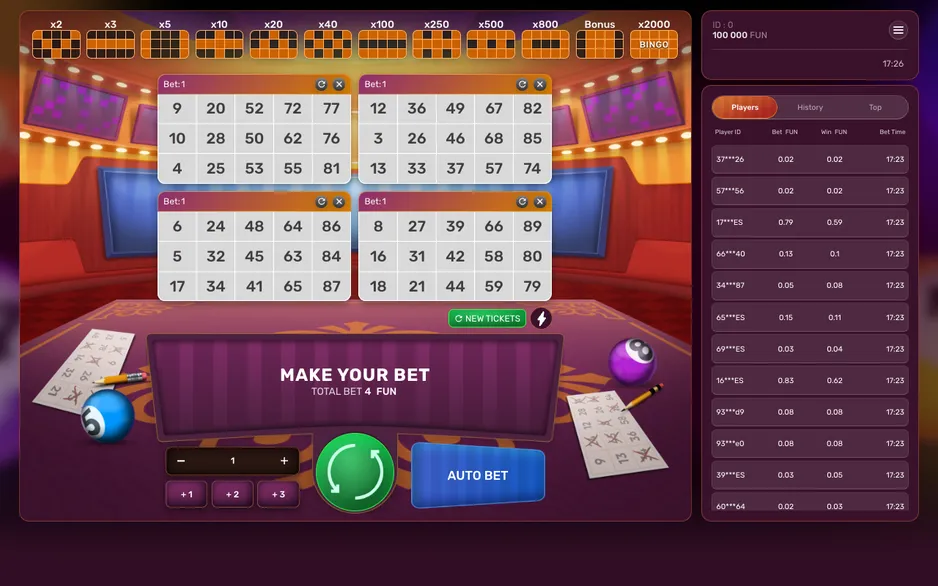
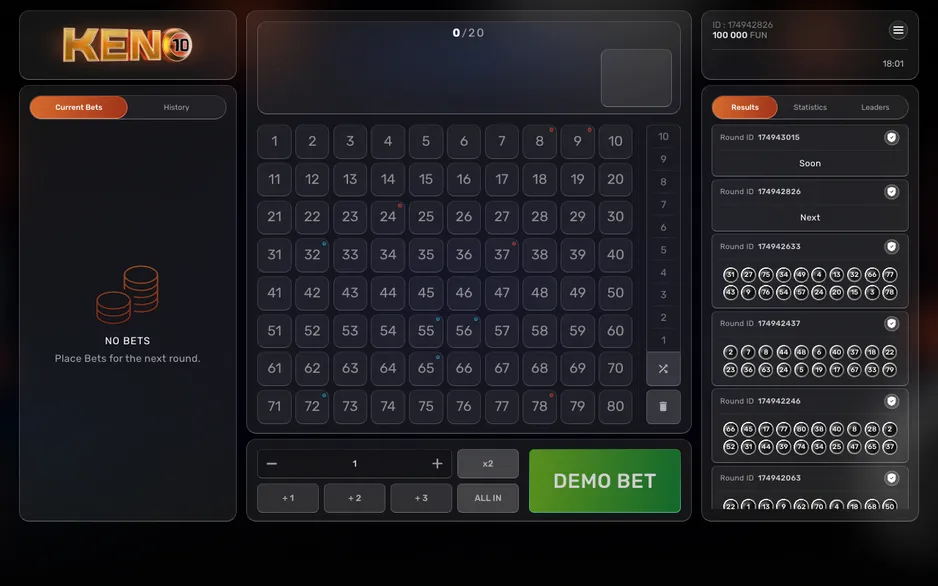
Keno lets the player choose numbers from a numbered pool. Keno 8 and Keno 10 use different pick limits and payout ceilings. Bingo Star checks patterns on tickets and includes bonus-ball rules. Lotto Boom uses matching ticket combinations. Keno Express takes a different approach with Greater, Smaller, In Range and Out of Range markets.
Use the rules for the selected mode when comparing the official rate or maximum return.
Compare every game in this group
RTP describes a long-run rate. The observed return is a small sample, not RTP or a forecast. Published multipliers and loaded money caps are separate limits; mode and version notes matter.
| Game | RTP (official rules) | Max win / multiplier (official) | Observed return: 100-round demo, small sample | Demo |
|---|---|---|---|---|
| About Bingo Star | 97% (captured rules); official card range 96.5–97.2% | 200,000× single ticket; 206,000× four tickets | 61.00% (100 rounds) | Practice with Bingo Star |
| About Keno | 87.5–99.6% | 2,000× Keno 8 / 10,000× Keno 10 | 84.00% (100 rounds) | Practice with Keno |
| About Keno Express | 97% | 97× published | — | Practice with Keno Express |
| About Lotto Boom | 98% in rules; studio FAQ also gives 99% | 3,000× published; money cap applies | 39.30% (100 rounds) | Practice with Lotto Boom |
What the demo sessions showed
Observations come from saved 100-round demo sessions on 14 November 2026 (UTC); any incomplete session is marked in the table.
Keno Express did not complete a 100-round sample. The first accepted ticket used 1 FUN on the inclusive range 25–75. Ball 53 fell inside that range, but the client failed to credit the expected return. The session stopped after the unpaid ticket.
The completed samples also varied. Keno returned 84.00%, Lotto Boom 39.30% and Bingo Star 61.00% of their total stakes. These are results from separate saved runs, not a ranking of the next draw. A low sample return does not revise the official RTP.
What to check before play
Before confirming a ticket, check both the stake per ticket and the total price. Read how a match becomes a payment; a highlighted number alone may not complete a winning pattern. For Keno Express, the saved credit fault is a reason to check settlement in a practice round before using that client further.
Treat bonus balls and extra tickets as game rules with costs and conditions. A past draw gives no reliable guide to the next result. Set a budget for cash play and keep the ticket count within it.
18+ only for real-money play, where allowed. Demo credits have no cash value. Set a spending limit and avoid chasing losses.
Frequently Asked Questions
Are Keno and Keno Express the same game?
No. Keno uses selected-number tickets. Keno Express offers range and comparison markets on the drawn number.
Why is the Keno Express sample return missing?
The client failed to credit its first expected winning ticket. The winning demo ticket was not credited.
Does a matching number always pay?
No. Payment depends on the chosen ticket, required match count or pattern. Read the rules for that mode.