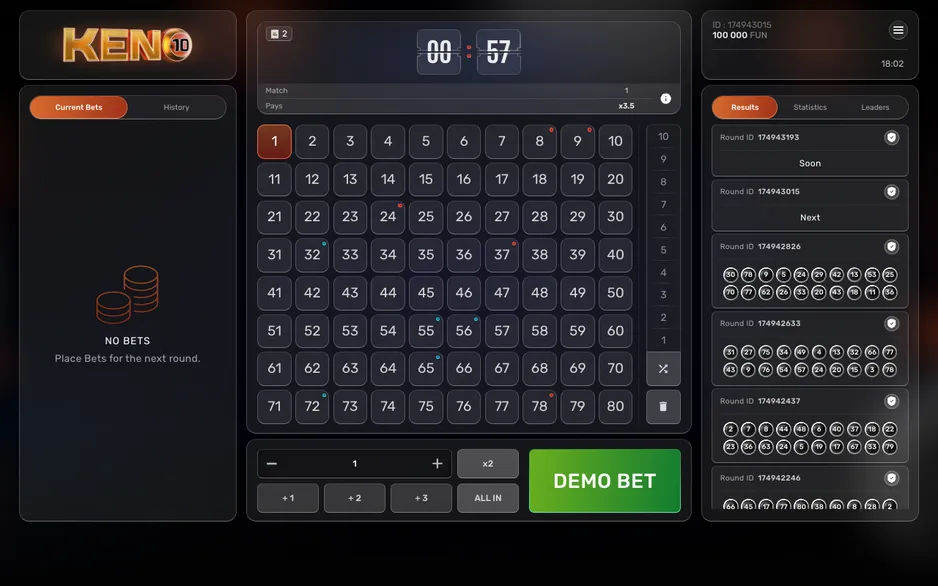
 Demo preview
Keno Demo: Fixed-Number Practice in 100 Draws
Number selection takes a moment; the live draw takes longer. Keno free play gives time to learn the accepted-ticket view, using a recorded run of 100 draws on number 1 as a simple starting exercise. Score: 7/10 for readable tickets despite waits between matches. Galaxsys keeps the ticket readable. Long gaps between matches can test patience even with virtual stakes.
Playing Keno for real money
Keno demo tickets spend virtual FUN with zero cash value, with their balance plus drawn-number results kept separate from any paid account at a licensed operator. The host chooses its ticket limits. Official studio figures cover $0.4–$400; this demonstration is set to 1–100 FUN. Multiple tickets increase the total charge. Paid draws are for adults aged 18+. Pick a ticket budget plus an end time before play, then stop at those limits instead of adding entries after misses.
What Keno is
Keno is a Galaxsys number-draw game in which chosen numbers must appear among the drawn balls, with a payout row that depends on how many picks the ticket holds. The draw reveals twenty numbers. Keno 8 permits eight picks, while Keno 10 permits ten, giving each ticket size a different set of matching requirements.
How a round plays out
Press Play free demo above, then read the introduction to the number grid. Select number 1 and set 1 FUN. Press Bet before the draw begins, checking the accepted ticket rather than assuming that a highlighted number on the grid means an entry has already been placed for the current round. The inspected limits are 1 to 100 FUN.
The credits have zero cash value.
Choose the number again before the next entry. Keep just one ticket per draw for the first exercise, so a change in the balance can be compared with one result instead of several tickets that might use different picks or stakes. Wait for all twenty drawn numbers.
Check the finished ticket before repeating it.
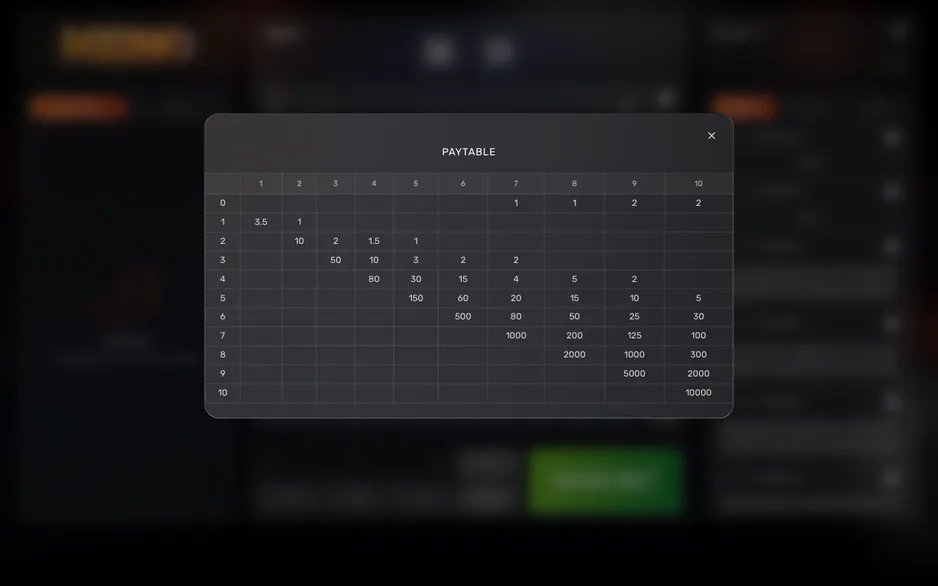
Round 2 was the first matching ticket. The fixed pick of number 1 returned 3.50 FUN from a 1 FUN entry, whereas an absent number returned nothing even if other nearby grid numbers lit up during the draw. The accepted ticket settles that distinction.
Highlighting a number alone is not an entry.
Specifications and return
The studio publishes a broad RTP range across ticket choices, so the highest rate should not be applied to every selection or used as a target for a short visit. Read the relevant payout row.
The sample below holds one pick unchanged throughout.
| Specification or measured result | Value |
|---|---|
| Official RTP range | 87.5–99.6% |
| Studio stake range | $0.4–$400 |
| Loaded demo stakes / cap | 1–100 FUN / 10,000 FUN |
| Maximum multiplier | 10,000× in Keno 10 |
| Volatility | Medium to High |
| Paylines | Not applicable to number tickets |
| Release date / year | — |
| Sample stakes / returns | 100 FUN / 84 FUN |
| Observed return | 84% (small sample, not RTP) |
| Number 1 on the finished ticket | Draws |
|---|---|
| Absent; zero matches | 76 |
| Present; one match | 24 |
Strengths and limits
Accepted tickets make it easy to check a finished selection, though long waits between matches can make adding more tickets feel like progress. More entries also cost more. Hot or cold colours describe earlier draws rather than useful forecasts. Repeat controls save input work, but require a fresh look at the full charge before confirmation.
Own history lists completed tickets; statistics and leaders describe wider public play. Use the ticket view to check the chosen number. Hot or cold colours summarize earlier frequency, so a blue number is no more due a hit than a red number is guaranteed to continue appearing when the next set of balls is drawn. The hash window checks completed draws.
Its scope ends with that finished draw.
More Galaxsys games to try
Galaxsys offers related number or ticket demos with a different pace: draws judged by completed card shapes, the express number-pick format, and revealed tickets judged by matching values. Their win conditions differ. Compare a completed ticket before choosing a preferred format. The assessment of draw pace and ticket odds explains Keno more fully.
Verdict: readable tickets, long waits
The score remains 7/10 for clear selection handling plus useful ticket records, though the wide published return range plus waits between hits weaken the appeal. Keno suits patient number-draw fans. Anyone seeking an immediate result after every tap should skip the live pace.
Free entries help reveal whether that wait feels comfortable.
How it was tested
Testing on November 14, 2026 covered 100 draws at 1 FUN, always entering one ticket on number 1 alone before each draw while leaving other selections unused. Accepted picks plus final returns were recorded. Twenty-four tickets matched. The longest losing sequence lasted thirteen draws.
Public number statistics were outside the sample.