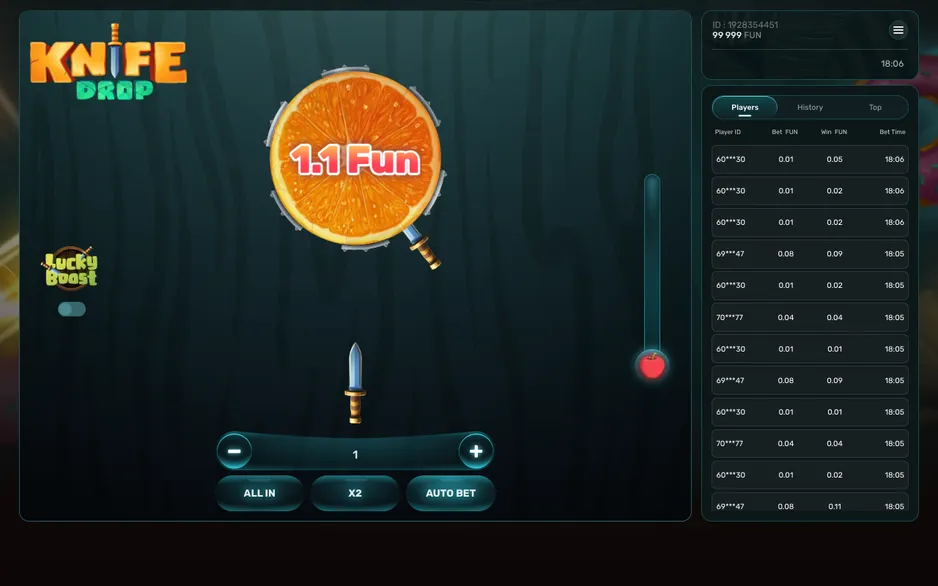
 Demo previewPlay free demoVirtual credits · No registration · 18+
Knife Drop
Play for real money ↗Operator links on this page are affiliate links. The site may earn a commission, which does not affect ratings or the published facts.
Knife Drop — Game Specifications
| Parameter | Value |
|---|---|
| RTP | 96.79–97.32% |
| Max Bet | 100 FUN (demo) |
| Max Win | 10,000 FUN (demo); 100× advertised in official card |
| Min Bet | 1 FUN (demo) |
| Provider | Galaxsys |
| Volatility | Low-Medium |
| Lucky Boost | +50% cost; prizes use original bet |
| Bonus Trigger | 30 apples on Progress Bar |
| Game Category | Turbo Games |
Table of Contents
Knife Drop Game Review
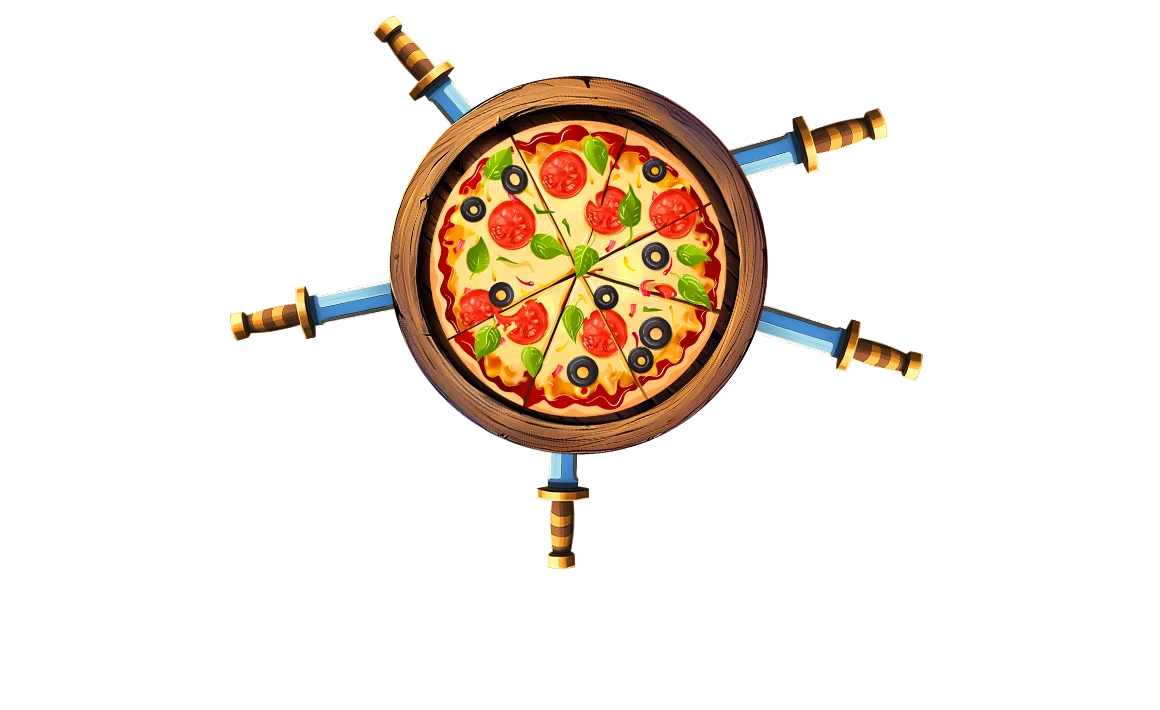
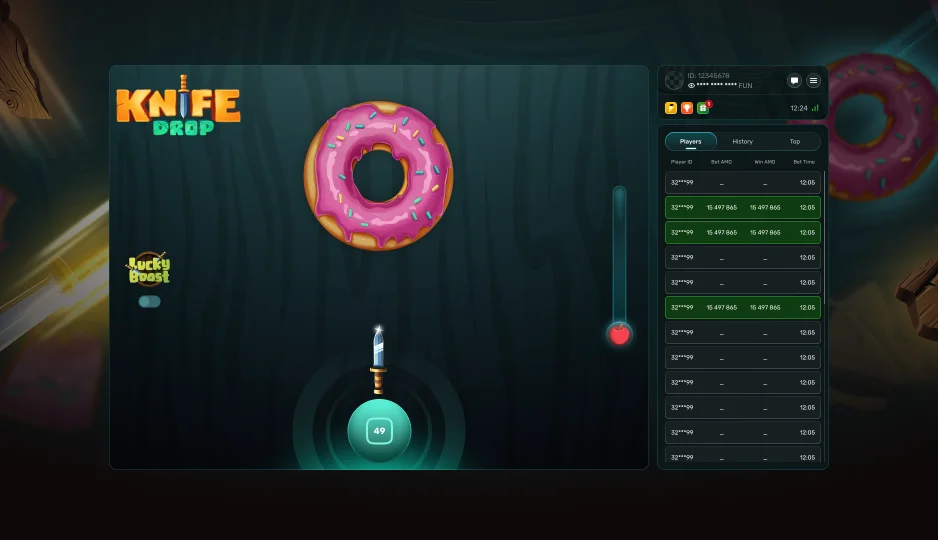
A rotating target turns a single bet into a knife throw in Knife Drop. Galaxsys lets you tap barrels, pizzas or doughnut-shaped targets, then displays the awarded odds after impact. Score: 6/10. The action is easy to follow, though the test's losing throws make the game's every-throw-wins wording a poor guide to what this demo actually does.
The target's motion does not turn this wager into an aiming puzzle.
Tap to throw, then read the amount
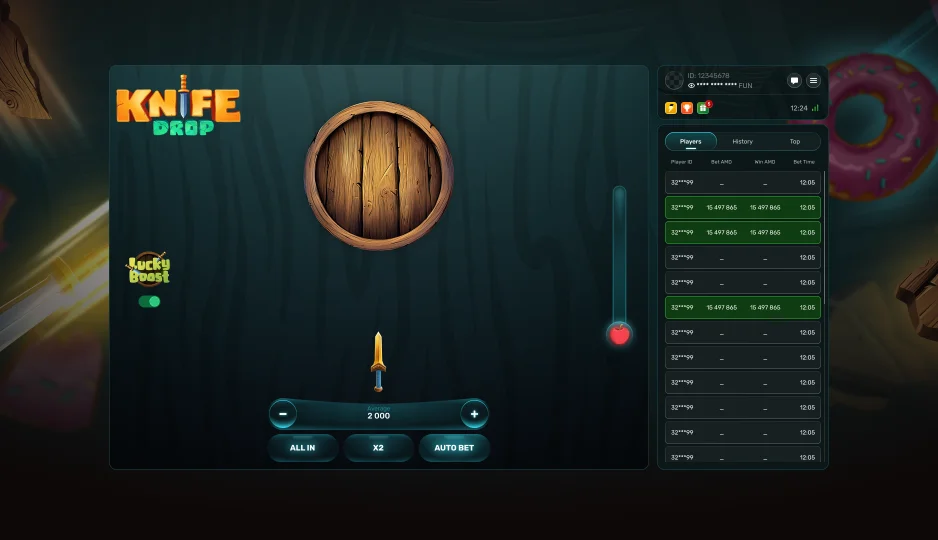
Set the wager in the bet field. Tap the target to begin. The knife hits and the result appears. Each tap is a separate stake, so treating the screen like an arcade game with repeated harmless touches can quickly commit more money than the first chosen amount suggests. Watch the displayed cost before repeating. Tapping reveals the game’s random result.
The loaded demo accepts 1–100 FUN per throw and lists a 10,000 FUN win cap. Older official limits show 40,000 FUN. An official card also advertises 100×. The return-to-player range is 96.79–97.32%, with Low-Medium volatility stated separately. These are published descriptions rather than a promise that any short series of throws will stay close to even.
Demo: the unboosted results
The throw practice page with boost-price guidance shows the controls with virtual credits. The session placed 100 manual bets at 1 FUN, using a single central tap each time; its observed return is a small sample and not RTP.
| Measure | Value |
|---|---|
| Throws | 100 |
| Bet | 1 FUN |
| Lucky Boost | Off |
| Total wagered | 100.00 FUN |
| Total returned | 76.90 FUN |
| Observed return | 76.90% (small sample, not RTP) |
| Paying throws | 53.00% |
| Returns above stake | 53.00% |
| Best throw | 7×bet; round 5 |
| Longest losing streak | 5 throws |
Round 5 paid 7 FUN, the best result. Round 27 returned 5 FUN. Most successful throws paid much less than those peaks, while 47 returned zero and kept the session below its opening funds despite a little more than half the taps producing a payment. The result is straightforward to read in history. A wheel bonus never arrived. Lucky Boost remained off throughout.
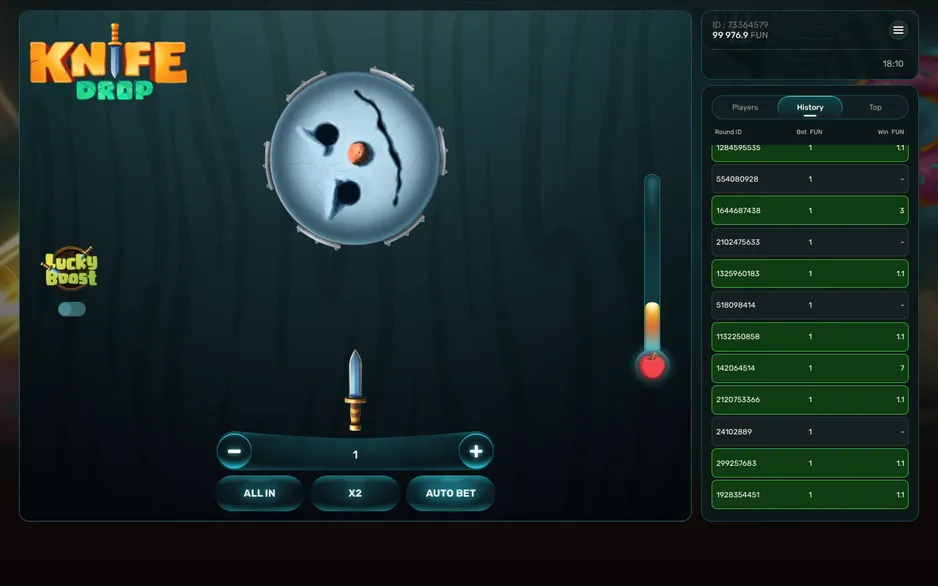
A zero in history is a lost wager, regardless of the impact animation.
Lucky Boost changes the price
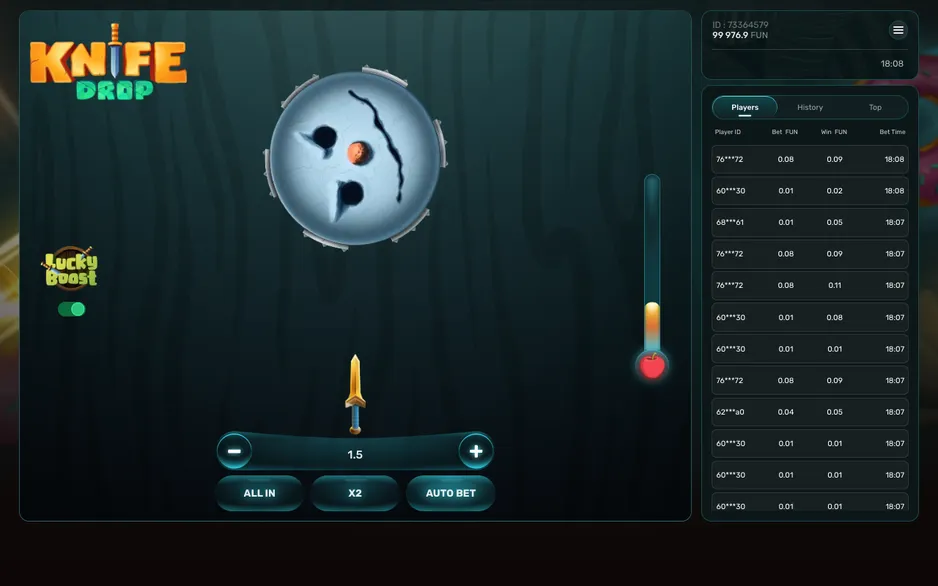
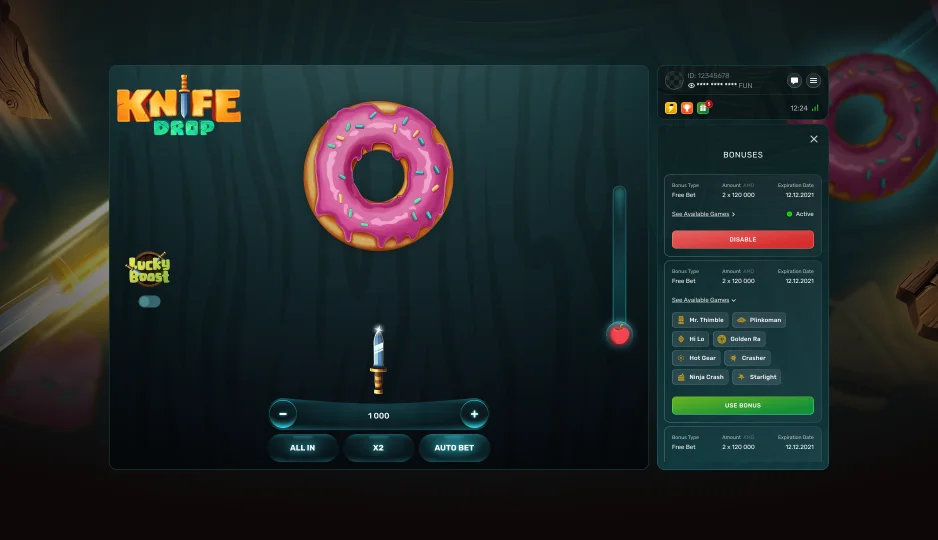
Lucky Boost adds 50% to the cost. Prizes still use the original stake. The preview changed 1 FUN to 1.5 FUN and turned the knife gold, so the larger charge should be checked separately from the number used to calculate a winning throw. The studio describes improved big-win chances. That changes the wager terms; recovering the extra price remains uncertain.
| Option or display | Published value | Effect |
|---|---|---|
| Standard throw | Original selected bet | The recorded session used this mode. |
| Lucky Boost | 50% extra cost | Winnings use the original bet amount. |
| Preview at base stake | 1 FUN becomes 1.5 FUN | No boosted wager was added to the test. |
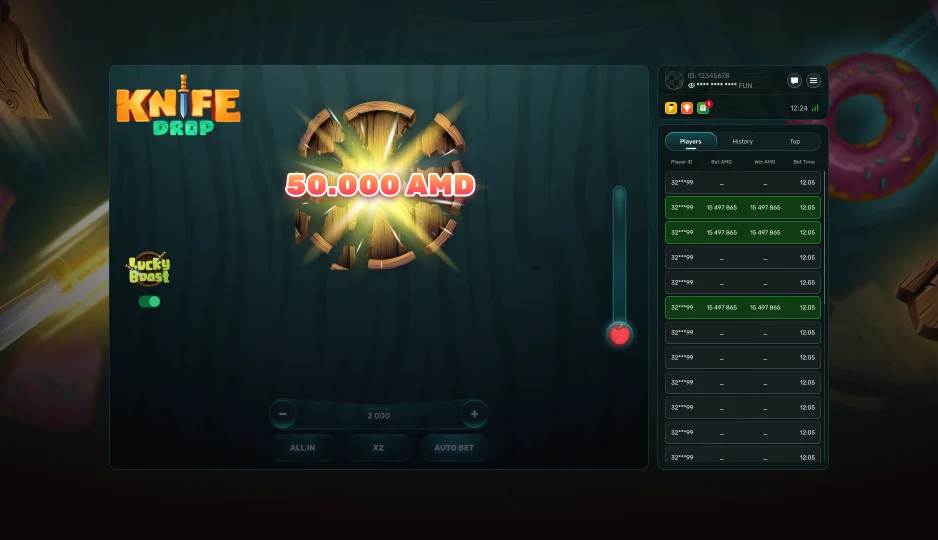
| Big-win display | 5× or higher | The target breaks apart. |
| Auto Bet | Chosen number of rounds | Repeated wagers need a combined budget. |
The boost preview came after the measured throws. Its appearance illustrates the control only. Paying more could change the result pattern, though the unboosted sample gives no basis for claiming how often the golden knife would produce a larger prize or whether that difference would cover the added charge. Use free practice to understand the toggle first.
Apples lead to a bonus wheel
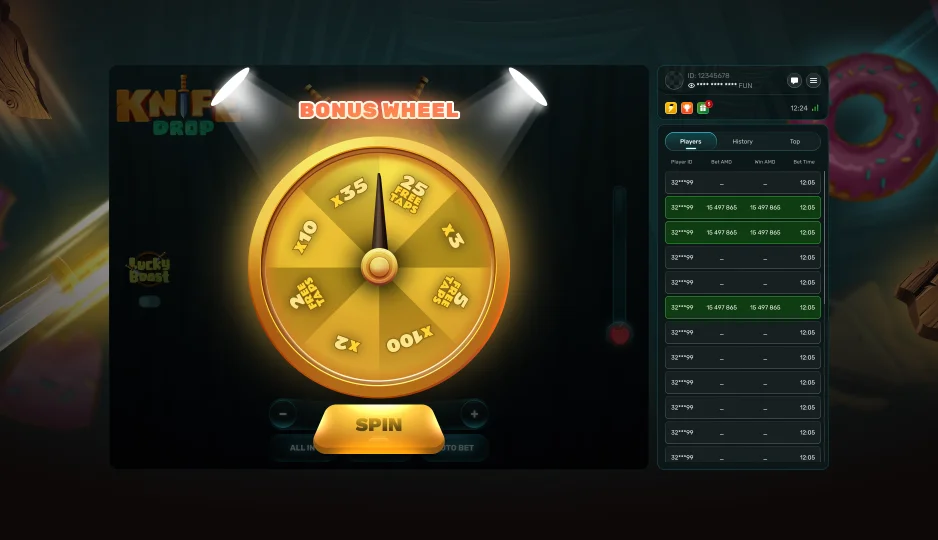
Apple hits fill the progress bar towards thirty. A full bar starts the bonus. The wheel has eight sections. Some award odds from 2× to 100×, while others grant 2, 5 or 25 free bets, making a completed bar a route to several kinds of reward instead of one fixed prize. The bonus stake uses an average of earlier bets.
The sample contained no bonus award. That leaves the wheel description grounded in the rules instead of a lucky test scene. Progress towards apples can give the next throw an extra attraction, but a nearly filled bar still sits beside wagers that cost money to place. The right stopping point comes from the planned allowance instead of the unfinished meter.
Boosted cost deserves checking even when the selected base bet looks unchanged.
Downsides and the win-wording conflict
Knife Drop is a weak fit for players expecting a payment from every throw. Some official copy promises exactly that. Other rules allow below-stake odds. The tested version went further by producing zero returns, so the honest player-facing description must allow losing wagers rather than repeat language contradicted by the recorded play. A positive prize claim is not a spending safeguard.
- The target animation supplies little tactical control.
- Lucky Boost charges more while using the original prize base.
- Apple progress can encourage further wagers after a planned stop.
The mobile browser supports direct target taps. Use the default amount carefully. Large central play areas make repeated touching easy, though a familiar gesture should still be counted as another purchase whenever it starts a throw. Auto Bet removes those repeated touches but leaves the cost. Choose a short practice series before judging whether the rhythm feels comfortable.
Verdict: accessible, with a caveat
The 6/10 score credits simple controls plus an obvious visual change when boost is enabled, while the clash between advertised guaranteed prizes and actual zero-return results holds the recommendation back. The test's largest hit added variety. The losing throws explain the reservation. Knife Drop works as a random instant wager whose controls happen to look like an arcade action.
Adults 18+ may consider cash play after setting limits. Pick a maximum session cost. Fix a stop time as well. If tapping becomes automatic after a loss, end the demo there before increasing the wager. Payment fees and withdrawal conditions come from the selected operator, requiring a separate check from the target rules.
Screenshots of Knife Drop
Frequently Asked Questions — Knife Drop
How is Knife Drop played?
Choose a stake and tap the rotating target to throw a knife. The awarded odds determine the return.
What RTP is listed?
Knife Drop lists a 96.79–97.32% return-to-player range. The exact setting depends on the version configured by the operator.
Does every throw win?
No, the tested unboosted demo recorded 47 zero returns in 100 throws, despite some official descriptions promising a prize each time.
How much does Lucky Boost cost?
Lucky Boost adds 50% to the wager cost while calculating prizes from the original stake. The demo preview changed 1 FUN to 1.5 FUN.
What is the maximum prize?
Official card material advertises 100×. The captured demo separately lists a 10,000 FUN money limit.
Is a practice demo available?
Yes, the free player uses virtual funds for learning target taps and settings.
What triggers the bonus wheel?
The rules describe collecting 30 apple hits on the progress bar. No wheel bonus arrived in the recorded session.
How was Knife Drop tested?
The demo ran 100 single taps at 1 FUN with Lucky Boost off and no automatic betting.
Player rating
Player comments
Only registered players can post comments.
No comments yet. Share how the game played for you.