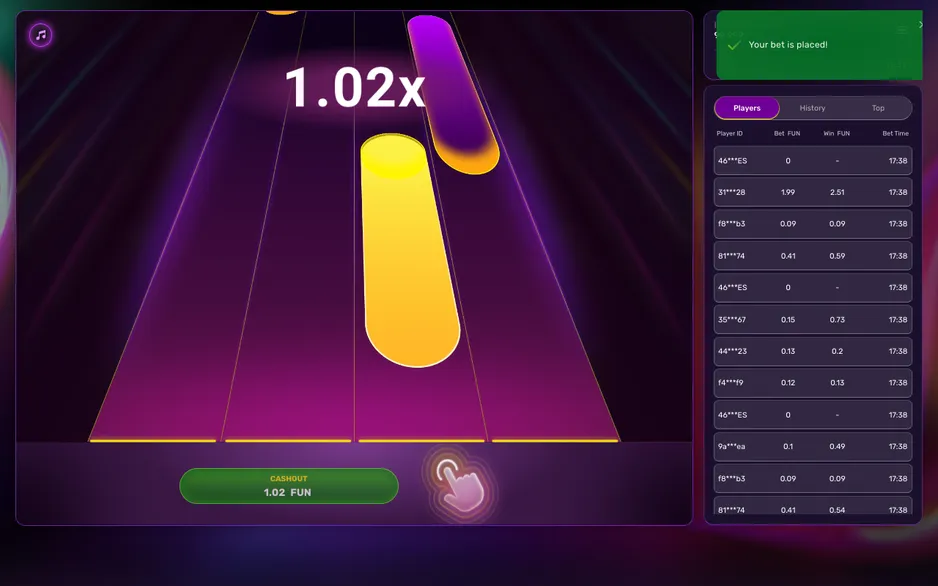
 Demo preview
Play Me Demo: 100 Short Holds with Release and Cashout
Releasing a piano tile freezes the odds in Play Me. A separate Cashout action finishes the bet, so free practice is useful for learning the pause between those two steps. Score: 7.5/10. The 100-round test made frequent small collections but still ended below its starting credit balance despite one natural Boost.
Playing Play Me for real money
The piano demo uses virtual credits. FUN has no cash payout, and neither frozen odds, a winning hold nor the final practice balance can carry results into a paid account at a licensed operator. Paid rounds are restricted to adults 18+. Pick a cash budget before holding tiles. Avoid longer holds to recover a loss.
The official card lists $0.10–$100, while older demo rules use another band and this loaded practice accepts 1–100 FUN; licensed operators decide their own paid limits. Check the stake before touching a tile. Releasing one does not withdraw its value.
What the piano-tile game is
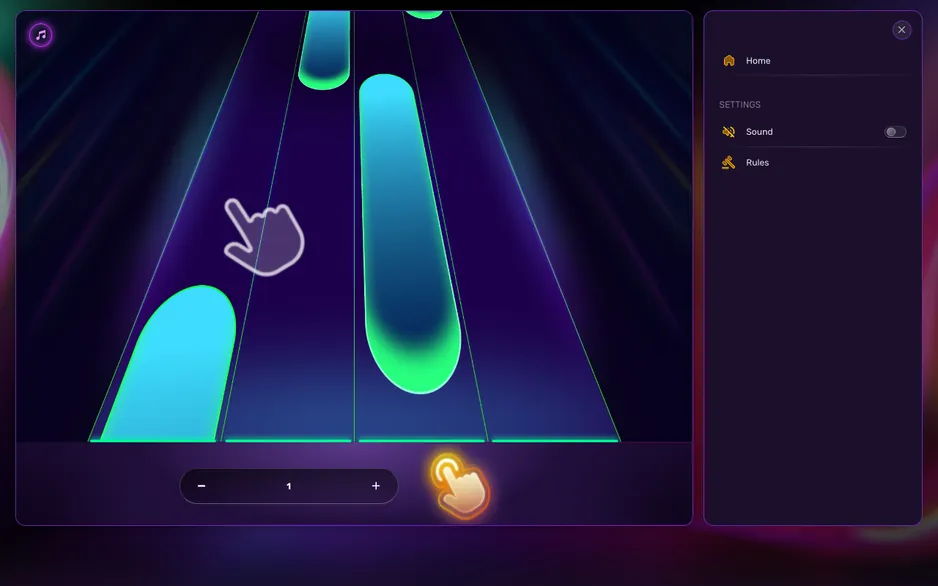
Play Me is a Galaxsys music-themed turbo crash game with scrolling tiles, where holding a tile grows the multiplier until release freezes it or a sudden stop loses the bet. Skipped tiles leave the round state unchanged. Rhythm supplies the setting rather than a required score. A fresh hold can resume an unfinished round.
How a hold round plays out
Start the demo, choose 1 FUN, hold the dedicated button briefly, then lift the finger and use Cashout if the round remains active before starting another hold on a tile. The test requested a one-second hold. That input plan still left each hold at risk. The odds can stop sooner. Wait for the final paid result after cashout.
Round 96 returned 3.42 FUN from a 1 FUN stake after natural Boost appeared during the hold, giving a larger finish than the many small wins elsewhere in that visit. The feature protects growth while active. Normal risk returns when Boost ends. Only a confirmed active Boost gives that protection. Personal history records the sum actually paid.
Specifications and short-hold return
Return to player is a long-run rate, while the high share of collected rounds in this test describes only one short-hold policy through a small set of fresh outcomes. Frequent payment is not the same as net gain. Most collections were near the original stake. A few blanks can outweigh many small wins. The displayed balance makes that cost visible.
| Rule or hold-session measure | Value |
|---|---|
| Official / loaded rules RTP | 97% |
| Studio cash stake range | $0.10–$100 |
| Loaded practice stakes | 1–100 FUN |
| Official maximum multiplier | 1,000× |
| Loaded win cap | 10,000 FUN |
| Volatility | High |
| Paylines | Not applicable to held tiles |
| Official release date / year | — |
| Total stakes / returns | 100 / 91.22 FUN |
| Observed return | 91.22% (small sample, not RTP) |
| Blank / paying holds | 17 / 83 |
| Natural Boost events | 1 |
Strengths and limits of the piano pause
The freeze after release is the strongest design choice because it gives the player a moment to read the current odds before collecting, rather than demanding another immediate hold to keep the game moving. The music menu adds presentation choice.
That extra Cashout step can catch a newcomer out.
A longer ordinary hold brings more risk. Skipped notes do not cause a loss. The game tests a decision to hold or release.
More Galaxsys games with active controls
Try sweet slicing followed by a collect choice for another physical action, while the tower's build-or-collect steps replace holding with discrete button presses before the next result. The parrot flight with a preset exit offers another music-themed crash comparison. Each asks when to stop risking a stake. Their input patterns differ. The assessment of piano holds, frozen odds and Boost covers this version's limits.
Verdict: the pause matters more than the music
A 7.5/10 verdict rewards the chance to pause before collection, though the additional tap can make a frozen amount look like a finished payout when the round is actually still waiting for a choice. Fans of active crash controls may enjoy it.
Players seeking a true note-timing game should pass.
Short holds clarify the controls in practice. They cannot turn the next round into a safe bet.
How the piano holds were tested
The November 14, 2026 test used 100 rounds at 1 FUN, requesting a one-second hold, releasing it and immediately collecting whenever the round remained active after that first hold. Every round used just its first hold. Final returns were logged with the balance. Music settings were checked after play. The captured base hold remained outside Boost.